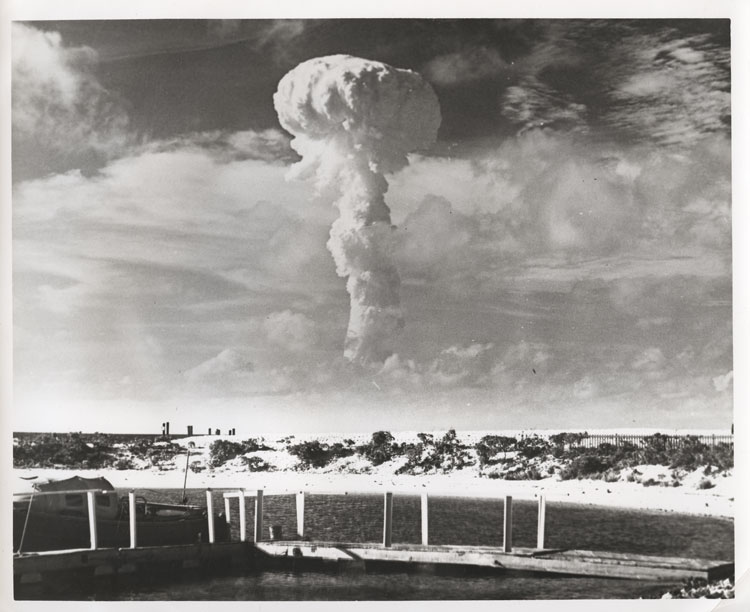
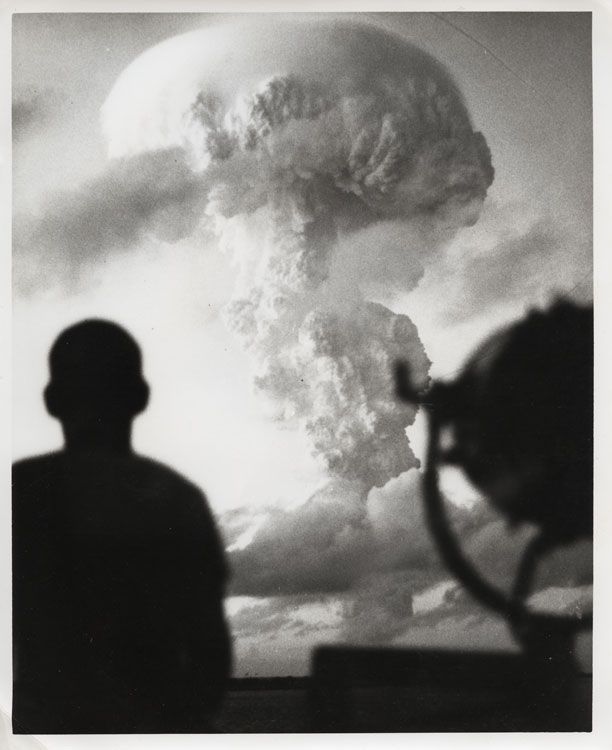
Yukon was the first shot in a search for a lighter, cleaner warhead to sit atop an intercontinental missile. Dropped on a parachute from a B-52 over the Pacific about 16 kilometres south of Christmas Island on 8 May 1962 and detonated at roughly 880 metres, the 100-kilotonne device opened a new family of Livermore designs built to draw most of their energy from fusion rather than fission — making them at once more efficient for their weight and less productive of fallout. The goal was a warhead small and light enough to ride a missile, and Yukon's experimental device was strikingly compact, barely 30 centimetres across.
The logic behind it was the arithmetic of the missile age. Every kilogram of warhead a rocket had to lift was a kilogram of range, accuracy, or extra weapons it had to give up, so the laboratories pressed constantly for more explosive yield from less mass. Shifting the balance toward fusion served that goal, and it carried a second, quieter selling point: a device that drew less of its power from fission produced less radioactive fallout, and could be called, in the language of the era, "clean." What that cleanliness described was a more efficient way of delivering a hundred kilotonnes onto a distant target.
Yukon belonged to Operation Dominic, the crash series the United States rushed into the Pacific in 1962 after the Soviet Union broke a three-year testing pause — the largest and last of the American atmospheric programmes. It was one of two dozen shots fired over the same water off Christmas Island in a matter of weeks, a burst of experimentation to validate a new generation of missile warheads before the door closed. Within a year the 1963 Partial Test Ban Treaty ended open-air testing, and the refinement of weapons like this one moved underground, out of sight.