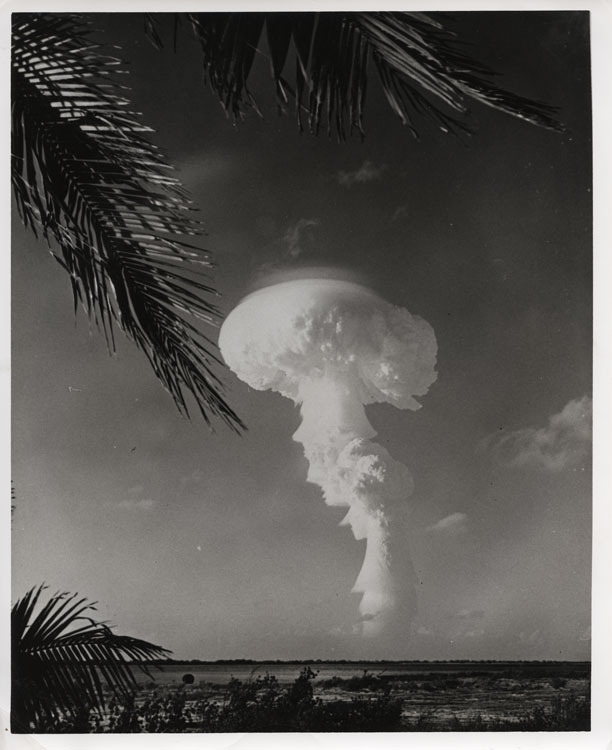
Encino helped fine-tune one of the most widely used nuclear bombs the United States ever fielded. Dropped from a B-52 over the Pacific near Christmas Island on 12 May 1962 and detonated at about 1,680 metres, the 500-kilotonne shot was a Los Alamos test of the B43 — a strategic bomb made in five different yields, from 70 kilotonnes up to a megatonne, and carried by more than a dozen types of aircraft, from nimble fighter-bombers to heavy strategic bombers. Encino checked a reduced-yield version of the weapon against a fuller one fired four years earlier, tuning the design and fixing a reference point for the higher-yield bombs still to come.
The bomb it refined became a Cold War workhorse. Built in the thousands and kept in service for three decades, the B43 could be dropped from high altitude or laid down at treetop height, its fall slowed by a parachute so the low-flying pilot could escape the blast. It hung under the wings of American aircraft at bases around the world — one of the ordinary, mass-produced instruments of a strategy that kept thousands of nuclear weapons ready for use at all times.
Encino was one of two dozen shots the United States fired over the same stretch of water off Christmas Island in the spring and summer of 1962, in the crash series it mounted after the Soviet Union broke a three-year testing pause. The men who staged and sampled those detonations — American servicemen, and the British and Gilbertese who shared the island — were, many of them, marked by it: decades later they would be recognised as radiation-exposed veterans, eligible for compensation for the cancers that followed. Within a year the 1963 Partial Test Ban Treaty ended open-air testing altogether.