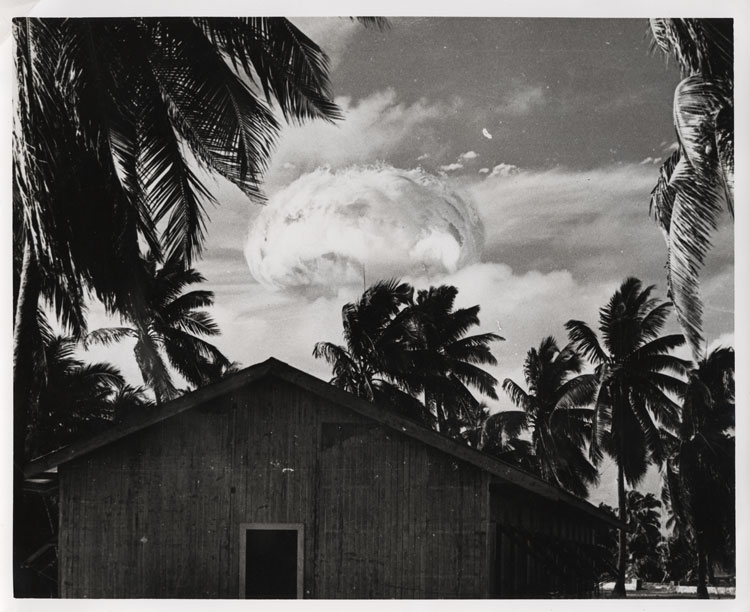
Chetco continued the search for a lighter warhead to carry on a missile. Dropped on a parachute from a B-52 over the Pacific about 16 kilometres south of Christmas Island on 19 May 1962 and detonated at roughly 2,100 metres, the 73-kilotonne device was a Livermore test of the Calliope family — the same lightweight, high-fusion design first tried a fortnight earlier at Yukon. Where Yukon had opened the family, Chetco refined it: the device came in close to its predicted yield, and the drop itself, missing its intended point by only about 60 metres, was precise enough that the test was recorded as producing the best diagnostic data yet gathered in the series.
The logic behind the design was the same as it always was for a missile warhead: every kilogram spared was range or accuracy a rocket didn't have to sacrifice, and building toward more explosive force from less mass had become the defining problem of the era. Chetco was one experiment in a sequence working steadily toward that goal.
It belonged to Operation Dominic, the crash series the United States fired over the Pacific in 1962 after the Soviet Union broke its own three-year pause in testing — dozens of shots in a matter of weeks, the last and largest atmospheric programme the country would ever run. Within a year the 1963 Partial Test Ban Treaty ended open-air testing altogether, and the refinement of designs like this one moved permanently underground.