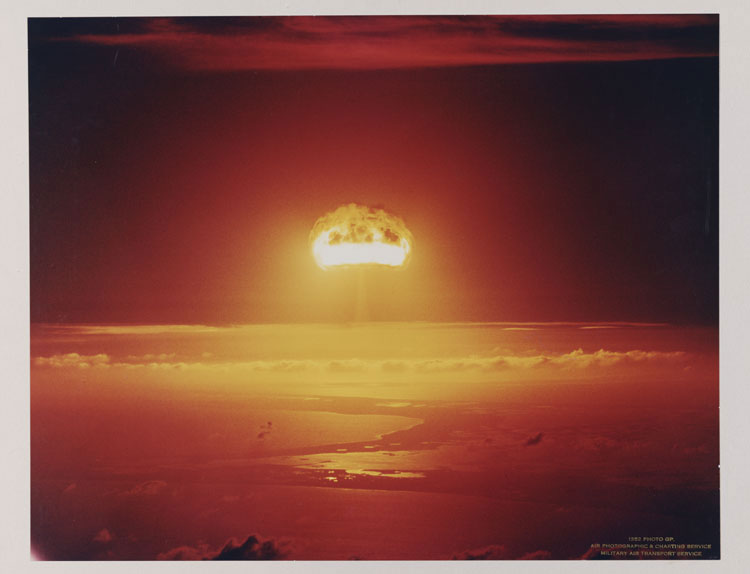
Yeso was a three-megatonne hydrogen bomb — roughly two hundred times the force of the Hiroshima weapon — dropped from a B-52 over the Pacific near Christmas Island on 10 June 1962. By the measure of most of history it was an enormous explosion; by the measure of the summer that produced it, it was one of a crowd. Yeso was a Livermore weapons-development shot, one of two dozen airbursts the United States set off over the same stretch of ocean in about eleven weeks, in the crash series it mounted after the Soviet Union broke a three-year pause in testing.
The island the bombs were fired beside was not America's to use. Christmas Island was a British possession, lent for the tests in exchange for American help elsewhere, and the men who serviced and witnessed the shots were British and Commonwealth servicemen, alongside the Gilbertese islanders who lived and worked there. Many were never issued radiation badges; many would spend the rest of their lives seeking recognition for the illnesses they attributed to the fireballs they had stood and watched.
Yeso belonged to the last generation of American nuclear tests fought in the open air. Within a year the 1963 Partial Test Ban Treaty would drive all United States testing underground and end the era of the visible mushroom cloud. What survives of a shot like this one is almost entirely its image — a few frames of a fireball among many, fired in a summer when a three-megatonne explosion had become an ordinary thing to put on a schedule.