X-ray diffraction print
All rights reserved. 2026 Strangelove Collection
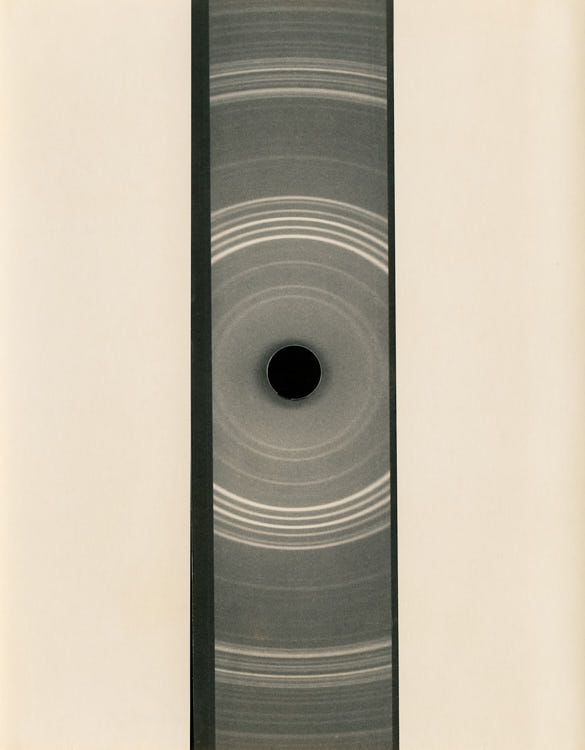
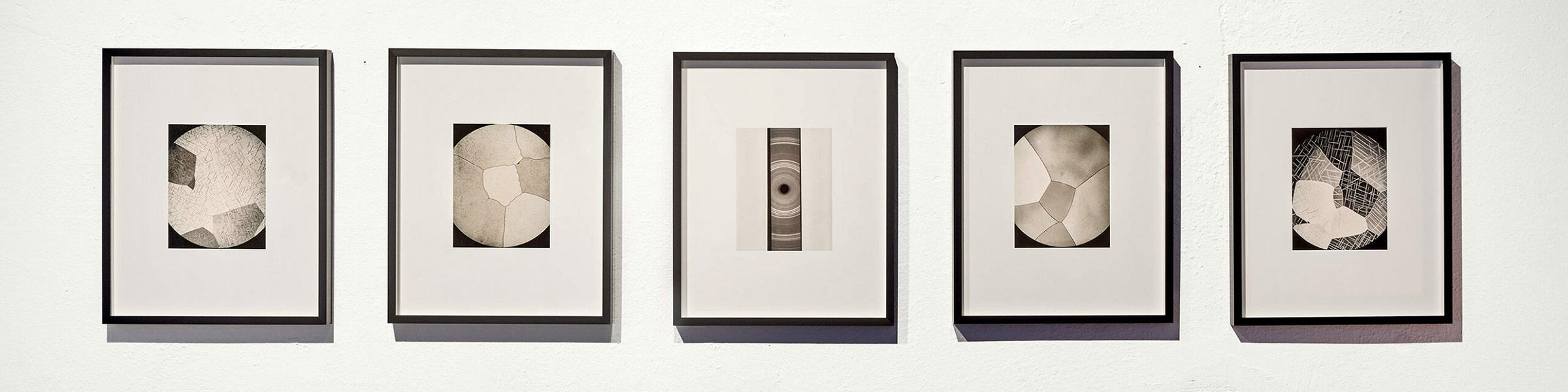
X-ray diffraction print

Verso note: 250x magnification

Verso note: 100x magnification, uranium-molybdenum alloy, longitudinal section, bottom-center

100x magnification, Mo-C alloy, top-circumference

U-2% Mo, 30ppm C alloy, Heat 19, sample B, 500x magnification

U-3% Si alloy, 500x magnification

250x magnification, Heat 519

250x magnification, Heat 519

250x magnification, Run 353

U-2.04% Mo, 2560ppm C alloy, Heat 23, sample B, 500x magnification

Eldorado Mining and Refining Company began in the 1930s as a producer of radium, mining pitchblende ore in Canada’s Northwest Territories. As uranium’s strategic importance emerged, the company’s output was redirected: by the early 1940s, Eldorado had become one of the primary wartime sources of uranium, alongside mines in the Belgian Congo and the Colorado Plateau. Ore from Eldorado went into the Manhattan Project, and ultimately into the bombs dropped at Trinity and on Hiroshima.
In 1965, Canadian government policy barred the military use of domestically mined uranium, restricting it to peaceful purposes only.
The photographs below were made in 1968 by Eldorado’s Metallographic Laboratory: original prints documenting thin sections of various uranium alloys — molybdenum, silicon, carbon — under the microscope. There is something quietly beautiful in them, an unexpected elegance surfacing from a material whose history is anything but.
Some prints from this edition are available through Kristine Hamann Art Projects.