Bikini Atoll
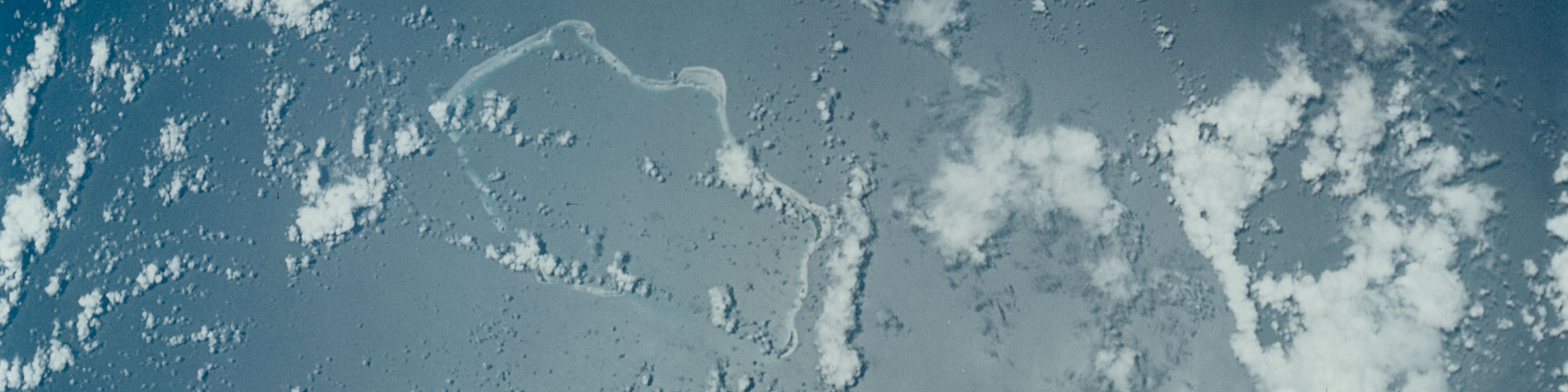
Bikini Atoll from orbit, Gemini 5, August 1965. The rounded bay in the reef at upper left is the crater left by Castle Bravo, detonated 1 March 1954 — two kilometres across, eighty metres deep
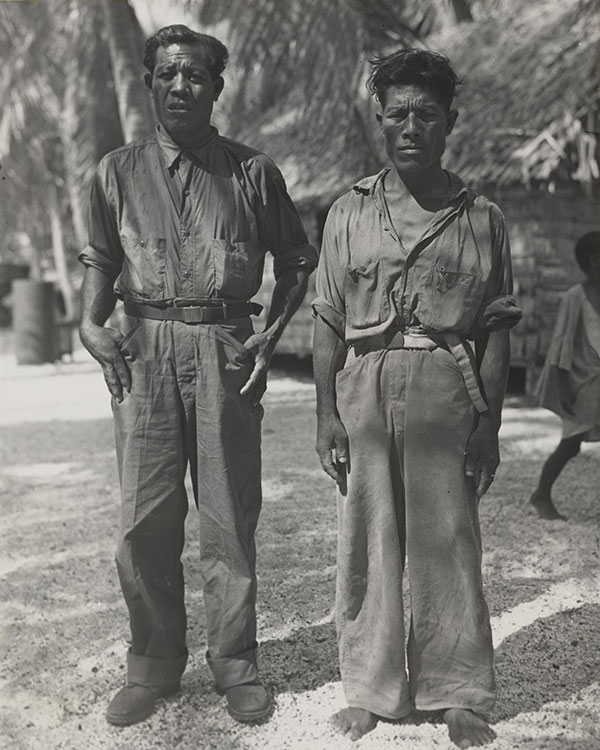
In February 1946, the military governor of the Marshall Islands, Commodore Ben H. Wyatt, stood on a beach at Bikini Atoll and asked 167 people to leave their islands “for the good of mankind and to end all world wars.” Their chief, Juda, answered that everything was in the hands of God. The Americans called him King Juda — a title he did not hold, in a language that was not his. A month later, the Navy re-enacted the meeting for film crews, because the first one had not been properly photographed.
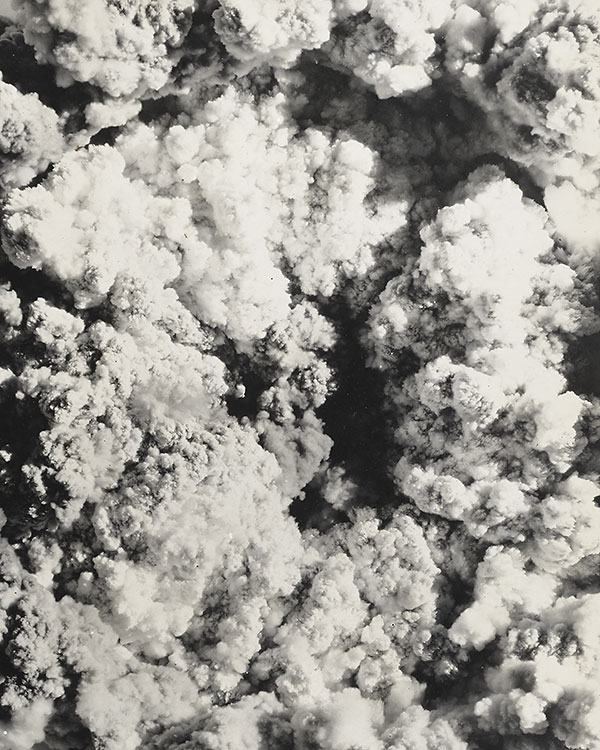
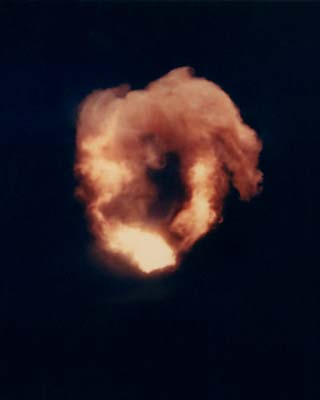
That detail contains the whole operation. Six months earlier, American authorities had confiscated the footage shot in Hiroshima and Nagasaki and classified it; the public would not see most of it for twenty-five years. At Bikini the reverse was arranged. Eighteen tons of cinematography equipment came to the atoll, and more than half the world’s supply of motion picture film. Over a hundred correspondents were quartered aboard a press ship. Two atomic bombs were detonated on a fleet of captured and surplus warships, and almost every moment of it was photographed by people whose job was to photograph it.
Bikini was the first atomic explosion arranged in advance to be seen.
This collection is made of what those cameras produced: official prints issued and reissued through Navy, press and Atomic Energy Commission channels, personal albums assembled by men who were there, press documents, certificates, snapshots.
It did not end in 1946. After an eight-year pause the Americans came back, and between 1954 and 1958 detonated twenty-one more bombs at Bikini — among them Castle Bravo, the largest weapon the United States has ever tested. Forty-three more were fired at Enewetak, two hundred miles west. Bikini remains uninhabited.
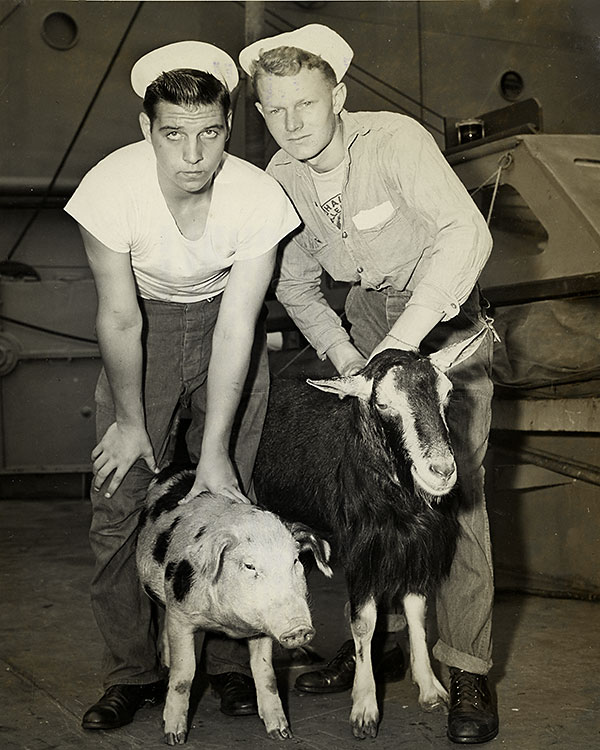
I take three stories from it. The spectacle — the preparations, the target fleet, the explosions. The odyssey of the people of Bikini, who left their islands and did not get them back. And the servicemen, who were issued certificates naming them guinea pigs.