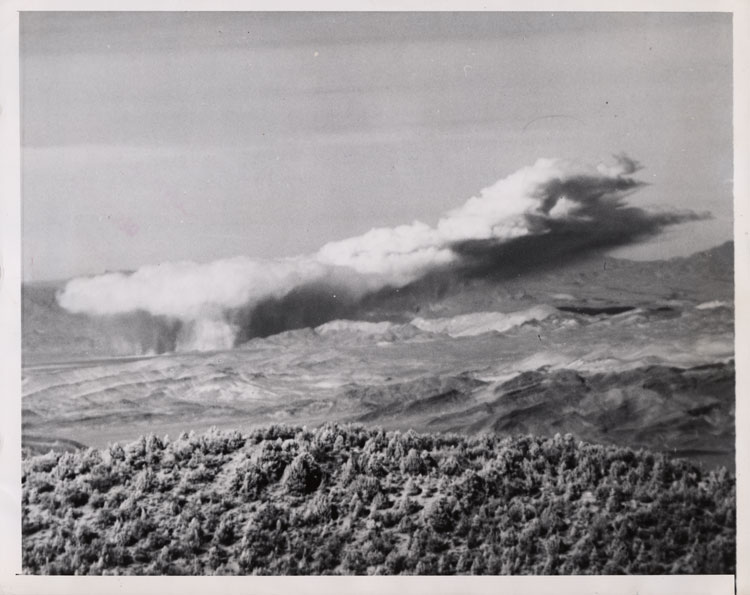
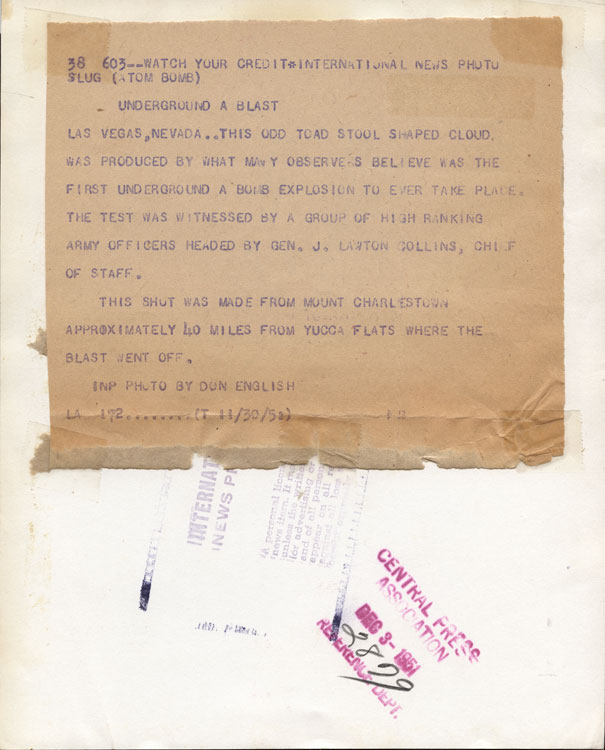
Uncle was the first nuclear weapon the United States ever detonated underground. Buried about five metres beneath the desert floor of Yucca Flat at the Nevada Test Site and fired at noon on 29 November 1951, the 1.2-kilotonne device — its codename a mnemonic for "underground" — tore a crater 79 metres across and 16 metres deep and threw a column of irradiated earth into the sky. It was a small shot with a long shadow: every American underground test that followed, and there would eventually be hundreds, began here.
Uncle was not an experiment in containment but in destruction. It was a scaled-down trial of a proposed ground-penetrating nuclear weapon — a bomb meant to bury itself before detonating, to crater airfields, collapse hardened bunkers, and block an enemy's advance. From Uncle's crater the designers calculated what a full-size 23-kilotonne version would do: gouge a hole more than 200 metres wide and 40 metres deep. It was the earliest of a long line of American cratering and demolition shots, running from the atomic demolition munitions of the 1950s to the "peaceful" excavation experiments of the 1960s.
Because the bomb was buried, it was among the dirtiest kind. Its fireball tore up and irradiated the ground itself, and near the crater the radiation reached 5,000 roentgens an hour in the first hour — lethal within minutes — with hazardous levels stretching kilometres downwind. The soldiers of Exercise Desert Rock III, some two hundred of them, watched from nearly ten kilometres away and were kept from approaching ground zero. Uncle was the final shot of Operation Buster-Jangle, the 1951 series that first brought troops to the Nevada desert to train in the shadow of the bomb; its fallout, like the rest of that programme's, drifted out across the country the soldiers had come to defend.