Shot Charlie was the third nuclear detonation of Operation Buster-Jangle, dropped by a B-50 bomber on 30 October 1951 from approximately 345 metres above Area 7 of the Nevada Proving Ground. The device — designated PC — was a Mk-4 bomb assembly using a composite uranium-plutonium core, producing 14 kilotons within its predicted range of 12–15 kt. Operation Buster-Jangle marked the first time the Department of Defense and Los Alamos Scientific Laboratory conducted a joint test series on US soil. The Buster component was a weapons development programme, testing various pit configurations in the Mk-4 assembly and proof-firing the TX-7E design that led directly to the Mk-7 lightweight tactical bomb. The Jangle component evaluated nuclear cratering using ground-level and subsurface bursts. Approximately 7,800 DOD personnel participated in total, 6,500 of them troops who conducted field exercises in conjunction with the detonations — the first such nuclear combat environment exercises ever held in the United States. These were designated Desert Rock I, II, and III.
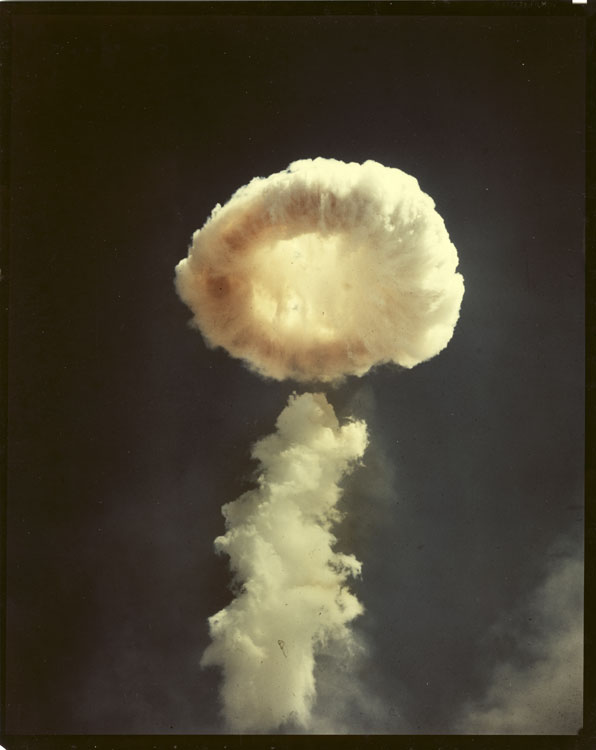

![Shot Easy, Operation Buster-Jangle — air-dropped detonation [burst height to confirm], Nevada Proving Ground (Yucca Flat), 5 November 1951; yield 31 kilotonnes.](https://strangelove-collection.de/wp-content/uploads/strangelove-2240.jpg)

