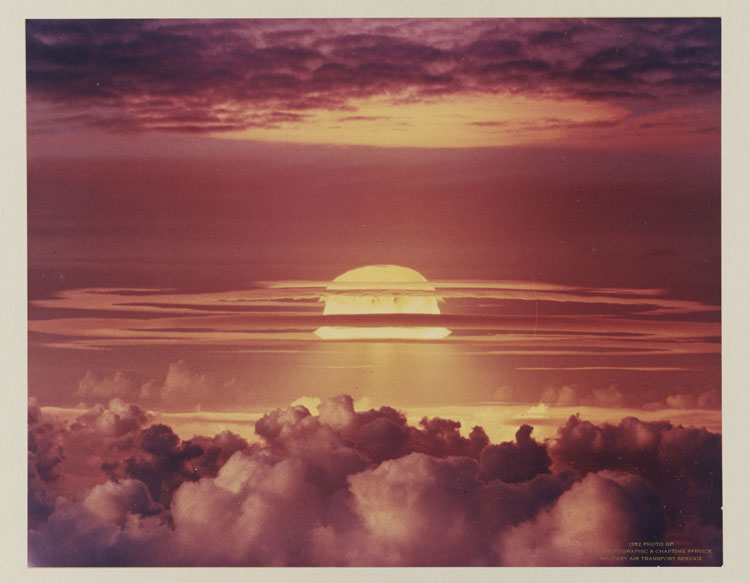
Sunset proved out one of the warheads built to sit atop America's first Minuteman missiles. Detonated as an airdrop over the Pacific near Christmas Island on 10 July 1962, it reached a yield of about one megatonne — the full design output of the W-59, a Los Alamos warhead intended for the Minuteman intercontinental ballistic missile. Earlier tests of the design had fallen short of that mark; Sunset was the shot that confirmed it could deliver its intended force, and did so with unusual efficiency for its weight.
The W-59 was one of two rival warheads — the other from the Livermore laboratory — competing to arm the Minuteman, the solid-fuelled missile that would soon stand by the hundreds in underground silos across the American West, ready to launch within minutes. Sunset belonged to Operation Dominic, the crash series the United States ran in 1962 to validate a generation of warheads that had been designed during the 1958–1961 testing moratorium and pushed into the stockpile without ever being fired at full scale. It was among the last detonations over Christmas Island, near the close of the final open-air test series the United States would ever conduct.
For all that Sunset confirmed, the warhead it validated had a brief and troubled career. The W-59 armed the earliest Minuteman missiles, but only about 150 were ever built; its rival was judged the better weapon, and the design was retired within a few years, dogged by doubts over its safety against accidental detonation and its stability as it aged. Sunset's own series was the last of its kind: within a year the 1963 Partial Test Ban Treaty ended atmospheric testing, and every warhead that followed was proven underground, out of sight.