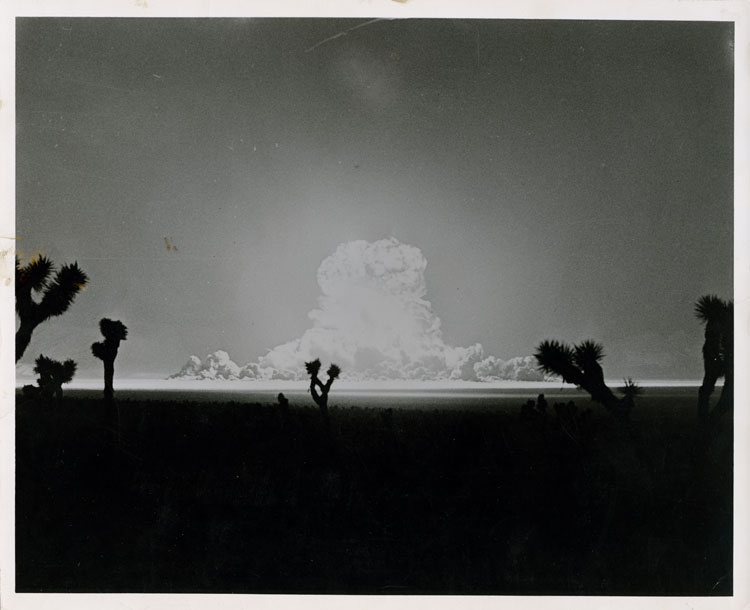
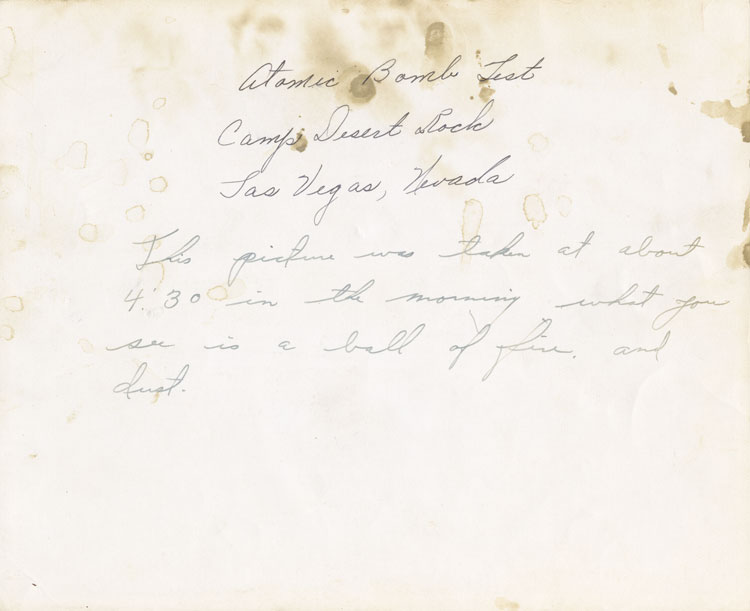
Simon was one of the larger detonations of the United States' 1953 continental testing, and one of the most heavily attended by troops. Fired from a 91-metre tower in Area 1 of the Nevada Test Site, it produced 43 kilotonnes — roughly three times the Hiroshima yield, and at the time the most powerful open-air tower shot the site had seen, running about twenty per cent above its predicted yield. Around 2,450 soldiers took part in the Exercise Desert Rock V manoeuvres at Simon, watching from the desert and advancing across the ground afterwards as rehearsal for combat on a nuclear battlefield.
The shot served the development of the TX-17/24 — weapons that would become the largest and heaviest the United States ever fielded. The device fired here was far smaller: a redesigned primary stage, strengthened with two kilograms of additional enriched uranium, an adjustment that nearly doubled the yield of the earlier version it was based on.
What set Simon apart came two days later and some three and a half thousand kilometres away. Rather than dispersing, the bomb's radioactive debris held together as it drifted east, until a thunderstorm over the Troy and Albany area of New York State washed much of it down in the rain — among the first clear evidence that fallout from the Nevada tests was reaching the cities of the populated eastern United States. The Atomic Energy Commission publicly described the local dose as minor; in a closed commissioners' meeting its own figure was twenty times higher, and a later Defense Nuclear Agency study estimated a maximum exposure of about two rem.