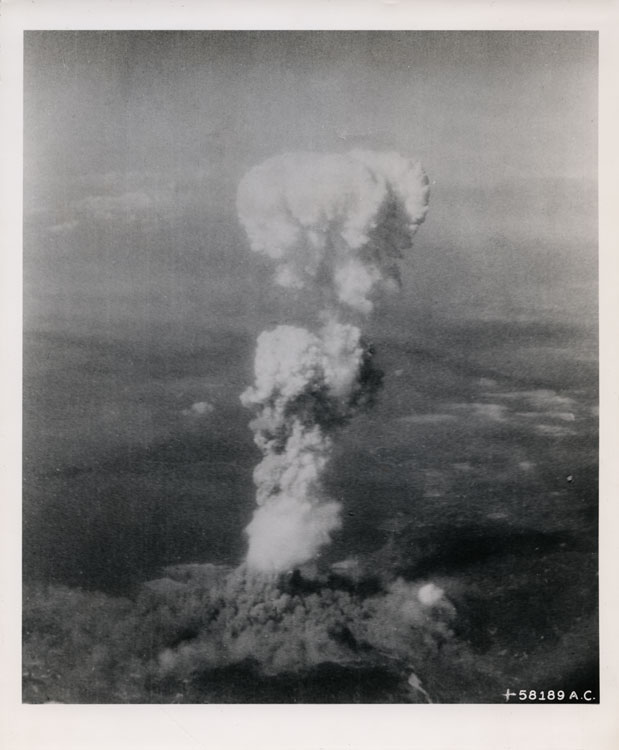
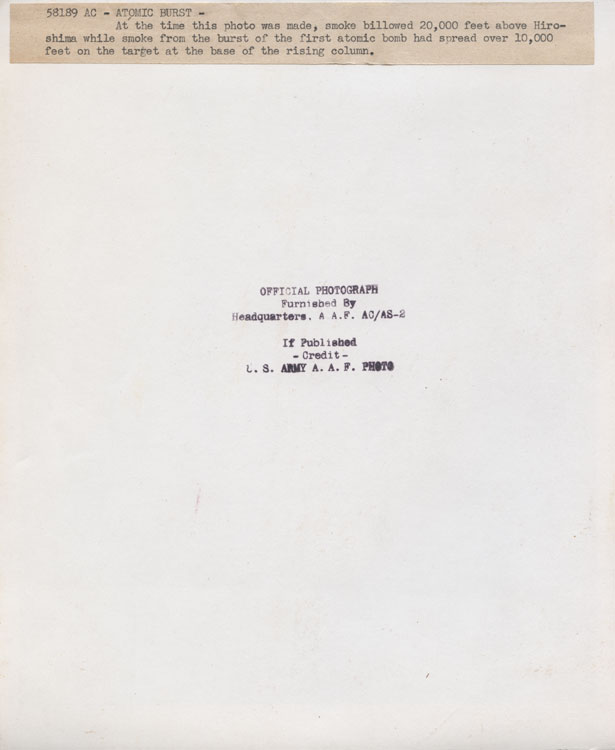
On 6 August 1945 at 08:15 local time, the B-29 Enola Gay of the 509th Composite Group, US Army Air Forces, dropped Little Boy over the city of Hiroshima, Japan — the first nuclear weapon used in combat. Little Boy was a gun-type uranium bomb, 3 metres long and weighing approximately 4,400 kg, containing around 64 kg of highly enriched uranium-235. It detonated at approximately 580 metres above the city, producing a yield of approximately 15 kilotons. Between 70,000 and 80,000 people were killed immediately; total deaths by the end of 1945 are estimated between 90,000 and 166,000. The city was devastated across a radius of approximately 1.6 kilometres from the hypocentre. Two observation aircraft accompanied the Enola Gay on the mission: The Great Artiste, carrying blast measurement instruments, and Necessary Evil, the photography aircraft from which this image was taken. This photograph was issued as an official press print by Headquarters, Army Air Forces, AC/AS-2 — the Assistant Chief of Air Staff for Intelligence — under catalog number 58189 A.C.