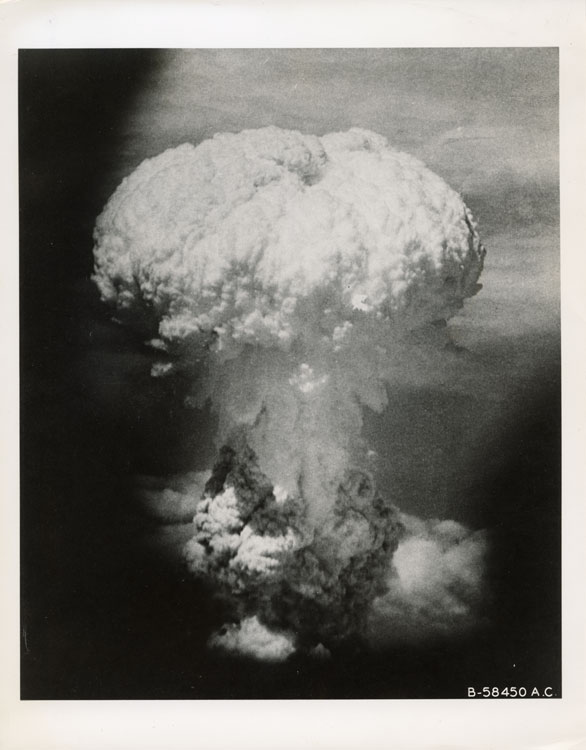
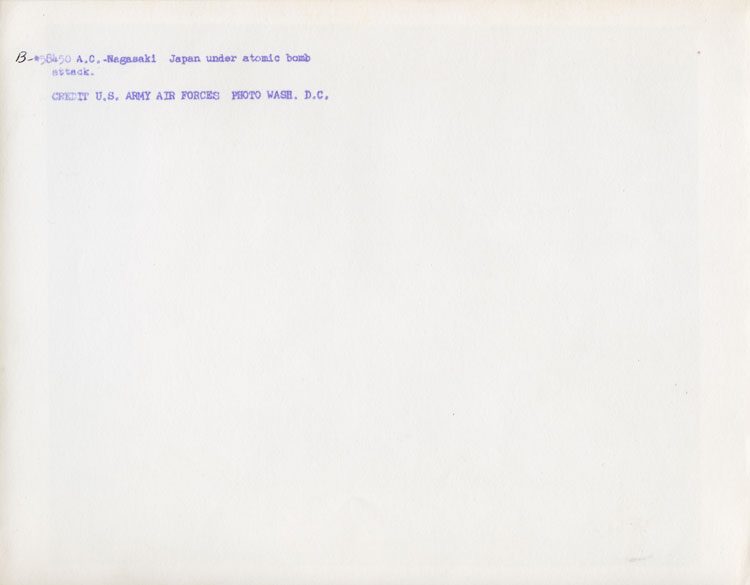
On 9 August 1945 at 11:02 local time, the B-29 Bockscar of the 509th Composite Group, US Army Air Forces, dropped Fat Man over the city of Nagasaki, Japan — the second and final nuclear weapon used in combat. Fat Man was a plutonium implosion bomb, approximately 3.3 metres long and weighing approximately 4,670 kg. It detonated at approximately 503 metres above the city, producing a yield of approximately 21 kilotons. Nagasaki's hilly terrain contained the blast to a degree, limiting the destruction compared to what the yield would have produced over flat ground — yet between 40,000 and 80,000 people were killed, with total deaths by the end of 1945 estimated between 60,000 and 80,000. The primary target that day had been Kokura; Nagasaki was the secondary target, struck after Kokura was obscured by cloud cover.