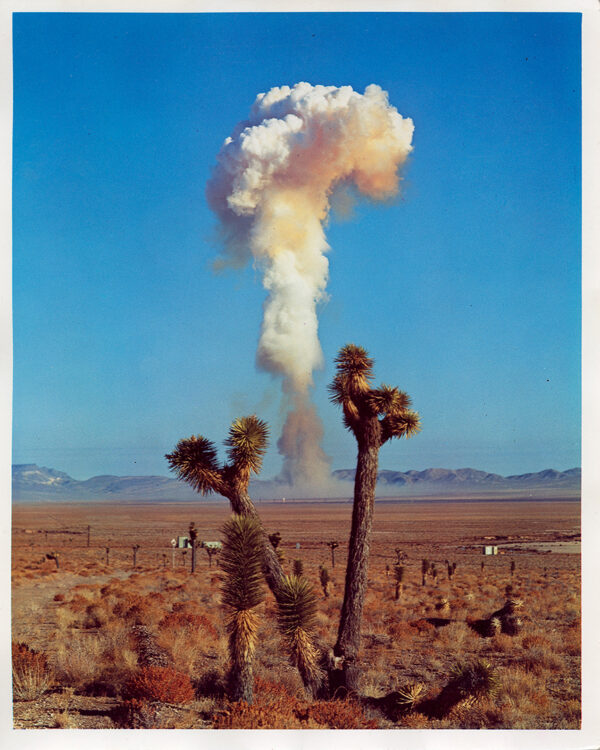
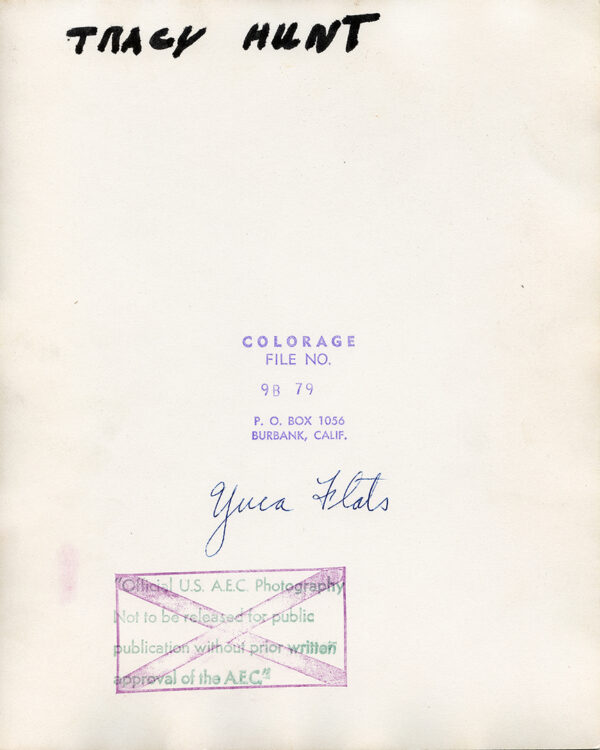
De Baca was a test of the prototype of the smallest nuclear weapon the United States ever built. The device it fired, nicknamed the "Gnat," was an early version of the W54 — a warhead roughly 40 centimetres long and about 30 kilograms in weight, small enough for a single soldier to carry. Detonated from a balloon 457 metres above Yucca Flat at the Nevada Test Site on 26 October 1958, it was meant to reach the full yield the design was capable of and, like its siblings Catron and Mora, fell short: it produced 2.2 kilotonnes, below prediction.
The weapon this device became is among the strangest the Cold War produced. As the W54, it armed the Davy Crockett — a nuclear round fired from a recoilless rifle by a three-man infantry crew, with a range so short that the blast and its radiation endangered the men who fired it. In another form it became the Special Atomic Demolition Munition, the "backpack nuke," a bomb one or two soldiers could carry on foot, parachute into the sea, or set against a target by hand. It put the atom, in effect, into the hands of ordinary front-line troops — the furthest the United States ever went toward treating a nuclear explosion as just another weapon of the battlefield.
Making a bomb that small proved extraordinarily hard. The design was fired more times than any American nuclear weapon before it, in a long chain of tests — De Baca among them — as the laboratories struggled to make so compact a device detonate reliably. De Baca belonged to Hardtack II, the crash series the United States rushed through in the autumn of 1958 to prove as many weapons as possible before a testing moratorium took effect. The Davy Crockett and its miniature warhead entered service a few years later and were quietly withdrawn by the 1970s — a weapon too small, and too dangerous to its own side, to be worth keeping.