Gnome was the first shot of Project Plowshare, the American program built on the hope that nuclear explosions could be put to civilian use — digging canals, freeing natural gas, generating power. Fired on 10 December 1961 at the end of a tunnel driven 361 metres into a bed of salt near Carlsbad, New Mexico, the 3.1-kilotonne device was meant to test one particular idea: that the intense heat of an underground blast could turn buried rock into a source of steam and electricity, and that useful isotopes might later be recovered from the glass the heat left behind.
The tunnel was supposed to seal itself the instant the device fired. It didn't. Within minutes, steam and then a plume of grey smoke and radioactive gas rose from the shaft, carrying contamination off the site and detectable several kilometres downwind, though it decayed quickly. It was days before crews could safely approach the shaft again, and true re-entry into the chamber the blast had carved did not happen until the following spring.
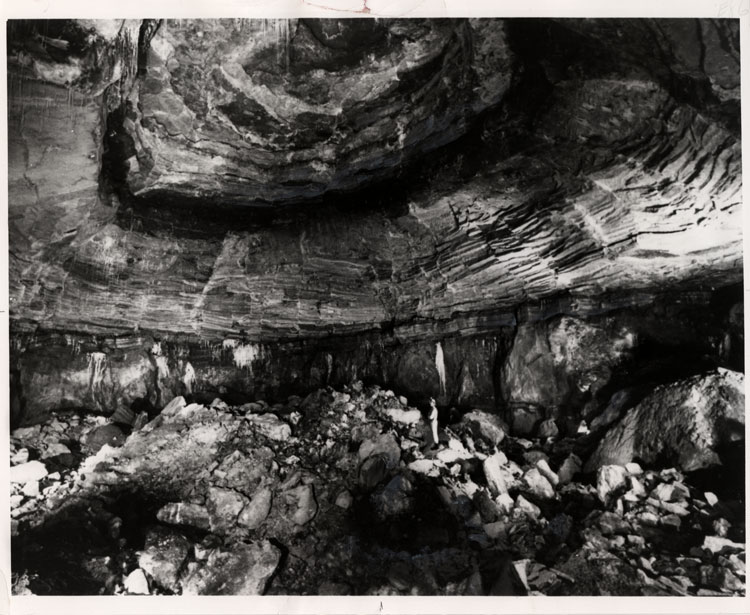
What Gnome actually proved had little to do with electricity. The explosion opened a cavity in the salt roughly 50 metres across, and unlike almost every other underground test the United States ever fired, that cavity did not collapse — it stood open and stable, one of the very few such chambers ever to survive its own detonation. When engineers finally walked inside six months later, they found it still hot, its walls fused into salt stalactites tinted blue, green, and violet by the radiation that had shaped them. That underground chamber, and the small marker now standing over the site, are essentially all that remain to show Gnome ever happened — a rare case, among America's underground tests, whose physical trace is still there to see.