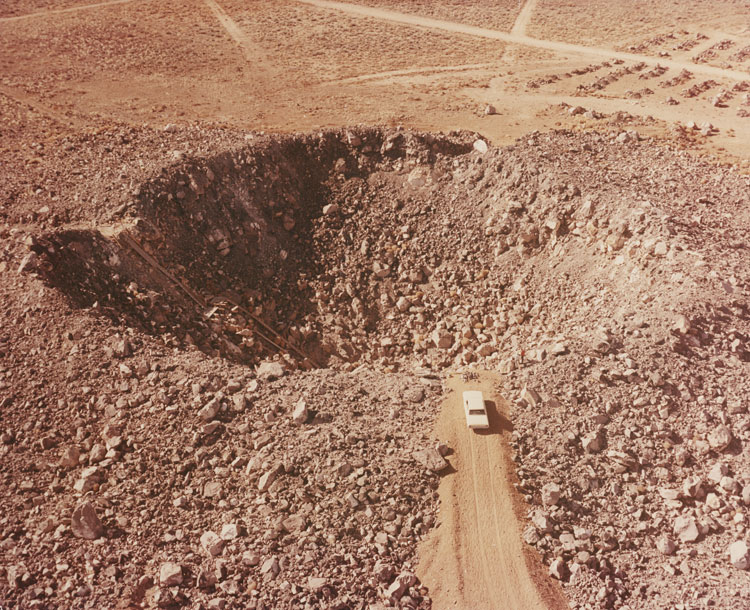
Cabriolet was a rehearsal for digging a second Panama Canal with nuclear explosives. Detonated on 26 January 1968, buried about 20 metres down in the hard volcanic rock of Pahute Mesa at the Nevada Test Site, the 2.3-kilotonne device blasted out a crater roughly 110 metres across and 37 metres deep. Its purpose was to learn how a nuclear explosion craters hard, dry rhyolite — the kind of rock a sea-level canal cut across Central America would have to pass through.
The shot belonged to Project Plowshare and its most ambitious scheme: the Interoceanic Canal Study, a five-year effort to work out whether a chain of nuclear blasts could excavate a new ocean-to-ocean waterway to rival the Panama Canal. Cabriolet was meant to be "clean" — a device engineered to release less radioactivity — because by 1968 any cratering shot ran up against the 1963 test-ban treaty, which forbade radioactive debris from drifting across national borders. In practice it vented: a radioactive cloud rose from the crater and was tracked downwind for some 760 kilometres, into falling snow.
That was the contradiction Plowshare could never resolve. Moving earth on the scale of a canal meant throwing fission products into the air, and no amount of "clean" engineering made a nuclear excavation clean enough. The interoceanic canal was never dug — by nuclear means or any other — and within a few years the programme that had proposed it was finished. Cabriolet's crater is still there on the mesa, one of a handful of holes left by an idea the world decided it did not want.