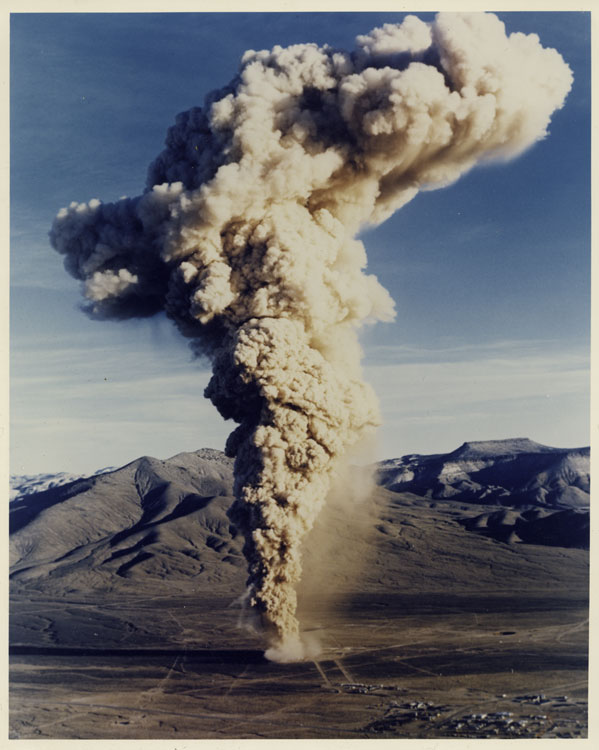
Shot Baneberry was the 666th nuclear test conducted by the United States, detonated on 18 December 1970 as part of Operation Emery in Area 8 of Yucca Flat, Nevada Test Site. The 10-kiloton device was buried at 274 metres below the surface, but its energy cracked the soil in unexpected ways, causing a fissure near ground zero and the failure of the shaft cap. A plume of fire and dust was released three and a half minutes after ignition, raining fallout on workers across the test site. The radioactive plume released 6.7 megacuries of radioactive material, including 80 kilocuries of iodine-131. After dropping a portion of its load locally, the plume's lighter particles were carried by winter storms and the jet stream, deposited as radionuclide-laden snow in Lassen and Sierra counties in California and across parts of Nevada, Idaho, Oregon and Washington. The cloud was visible from Las Vegas, 120 kilometres away. 86 workers at the test site were exposed to fallout. Nuclear testing at NTS was suspended for six months pending investigation. Two of the exposed workers died in 1974 from acute myeloid leukemia. Their widows filed lawsuits against the US government. The Department of Energy maintained the radiation had caused no harm. In a 1996 ruling, a US Court of Appeals found the government had acted negligently but concluded that the Baneberry test had not caused the cancer. The case drove a 25-year legal battle and directly contributed to the passage of the Radiation Exposure Compensation Act in 1990, under which 3,500 test site workers or their widows eventually received compensation. Baneberry became one of the defining events of the American anti-nuclear movement.