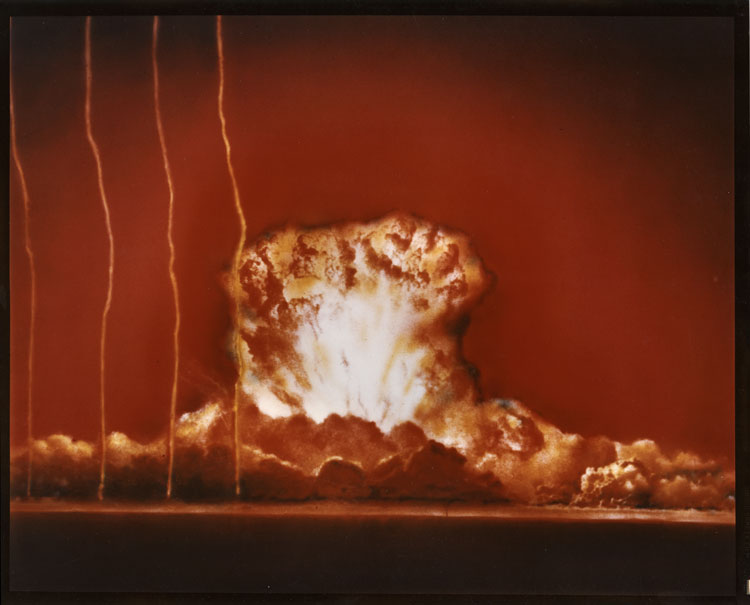
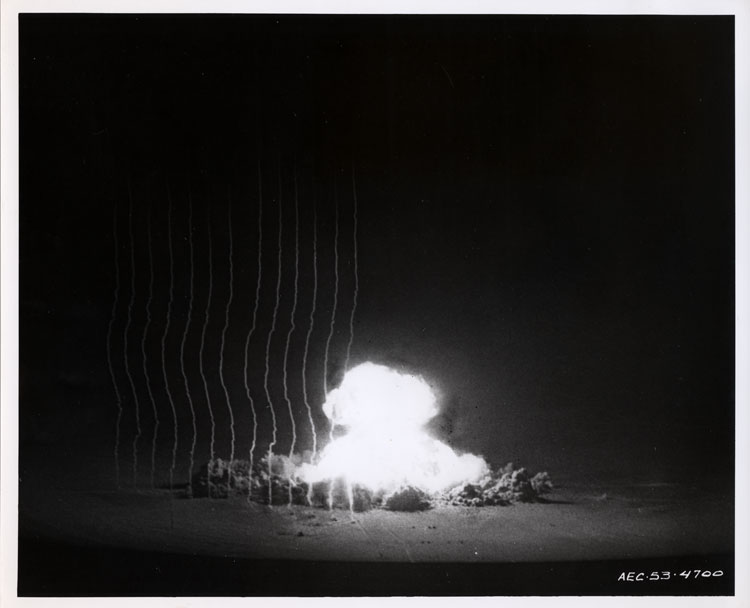
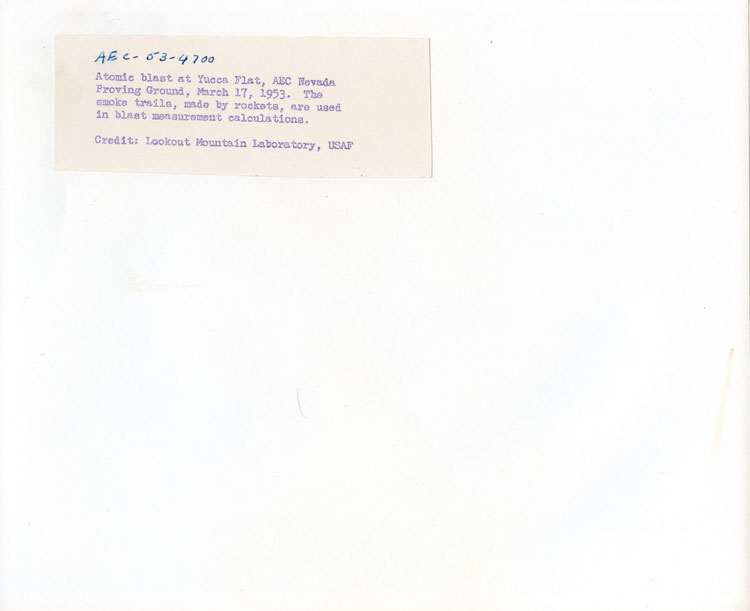
Shot Annie was the first nuclear detonation of Operation Upshot-Knothole, fired on 17 March 1953 at 05:20 local time from a 91-metre tower in Area 3 of Yucca Flat, Nevada Proving Ground. It was a weapon development test of an experimental device designated XR3 — a Mk-5 high-explosive assembly using a Type D pit with a betatron external initiator, the third test of this initiation system. The device weighed 1,225 kg and produced 16 kilotons against a predicted yield of 15–20 kt. Annie was designated an "open shot": civilian reporters were permitted to observe the detonation from News Nob, 11 kilometres south of the shot-tower, in a deliberate effort to provide the American press with direct access to a nuclear test. Operation Upshot-Knothole, of which Annie was the opening shot, released approximately 35,000 kilocuries of iodine-131 into the atmosphere, producing an estimated 89 million person-rads of thyroid tissue exposure in the civilian population — projected to result in approximately 28,000 cases of thyroid cancer and 1,400 deaths. The series also tested the radiation implosion systems that would underpin the world's first deployable thermonuclear weapons, proof-tested in Operation Castle the following year.