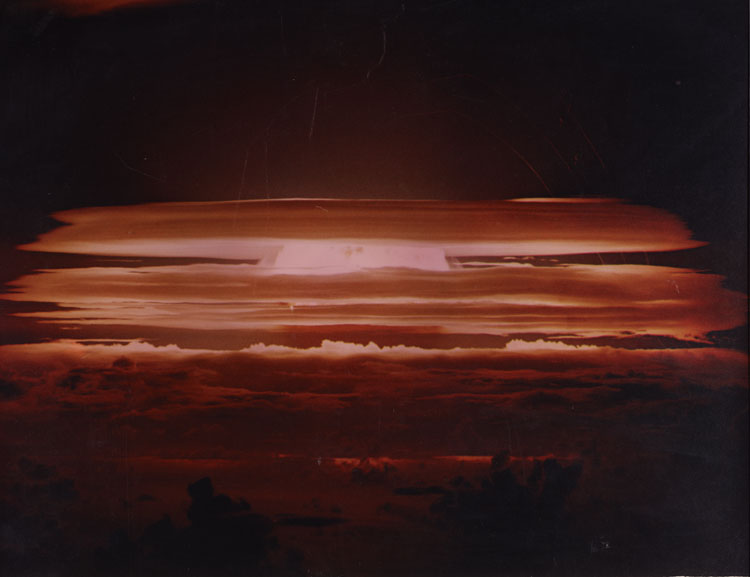
Cherokee was the first hydrogen bomb the United States ever dropped from an aircraft — and the drop went wrong. The Department of Defense had conceived the shot less as a weapons experiment than as a demonstration: it was meant to gather data on high-altitude bursts, but also, openly, to show the world and above all the Soviet Union that American bombers could now deliver multi-megatonne thermonuclear weapons by air. Both aims fell short. A Soviet Tu-16 had already air-dropped a thermonuclear bomb over Semipalatinsk six months earlier, so the feat was not the first of its kind; and on the day, the B-52 crew mistook an observation station for their aiming point and released roughly 6.4 kilometres off target. The weapon — a Los Alamos-designed Mark 15-type bomb of about 3,100 kilograms — burst over open ocean north-east of Namu Island rather than over its intended ground zero, and almost all of the planned effects data was lost.
The test took place on the homeland of the Bikinian people, whom the United States had removed from the atoll in 1946 and resettled elsewhere in the Marshall Islands; lasting contamination has kept them from returning. Like the other shots of Operation Redwing, it was named for a Native American nation — multi-megatonne weapons bearing the names of peoples the United States had already dispossessed, detonated on land taken from another. Cherokee was one of seventeen Redwing detonations, together releasing roughly 20.8 megatonnes; fallout from several of the series' surface and barge shots was later recorded on inhabited atolls downwind.