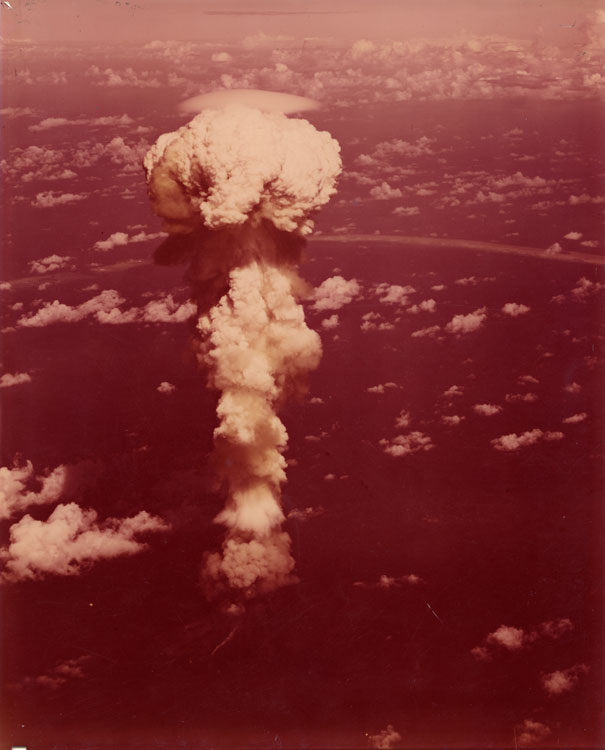
Shot Able was the first detonation of Operation Crossroads, conducted on 1 July 1946 over the lagoon of Bikini Atoll, Marshall Islands — the first nuclear test since Trinity in 1945 and the first conducted under public and international scrutiny. A Mk-3 Fat Man plutonium implosion bomb was dropped by B-29 Dave's Dream and detonated at approximately 158 metres above a target fleet of 95 vessels assembled to measure the effects of nuclear weapons on naval ships. The bomb missed its intended target — the battleship Nevada, painted bright red as the aiming point — by approximately 650 metres, limiting the damage to the fleet considerably. Five ships were sunk. Approximately 42,000 military and civilian personnel were present, along with observers from the United Nations and the international press. Operation Crossroads was conceived as a political and scientific demonstration, intended to answer the question of whether naval fleets retained any strategic relevance in the nuclear age. The answer Able provided was ambiguous — a miss at this scale showed that nuclear weapons required precision delivery systems, and that surface fleets, while vulnerable, were not automatically obsolete.