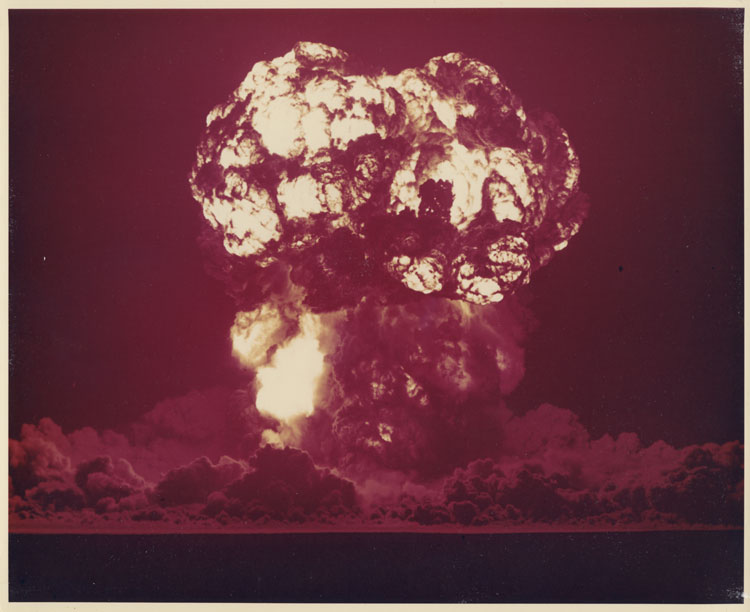
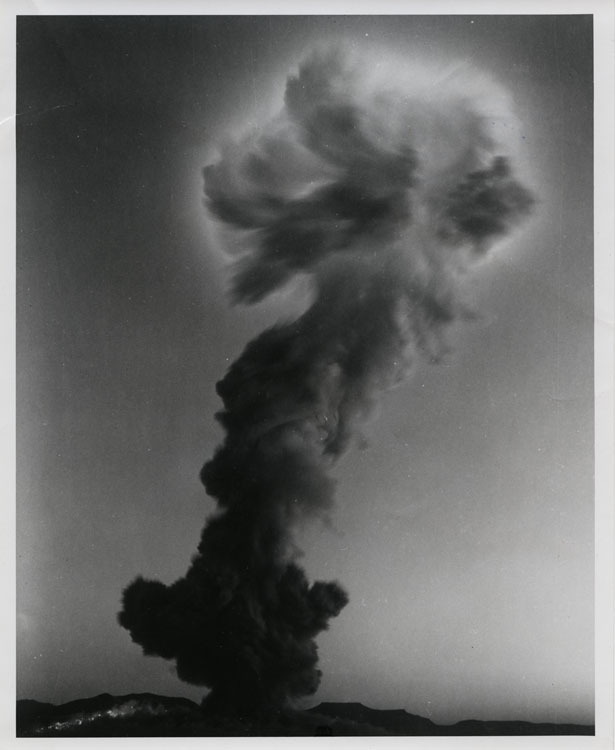
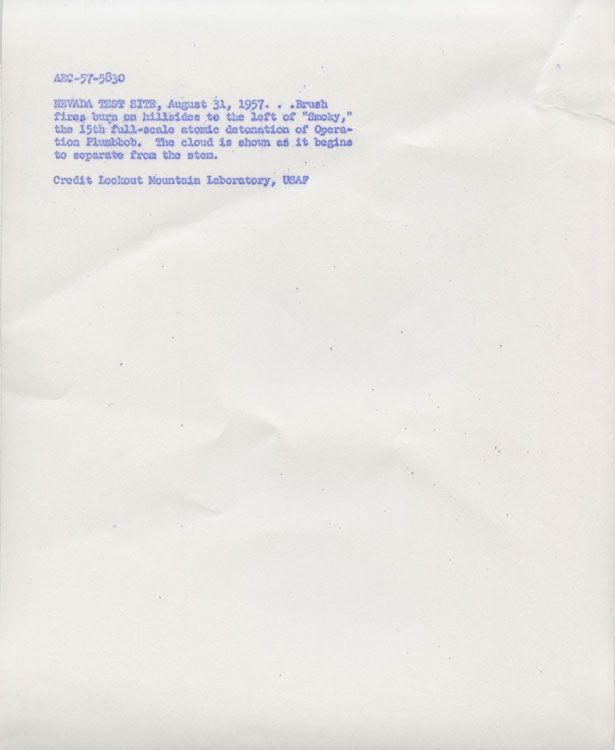
Shot Smoky was the 15th full-scale atomic detonation of Operation Plumbbob, fired on 31 August 1957 from a 700-foot tower in Area 8 of the Nevada Test Site. At 44 kilotons it was a UCRL development test of the TX-41 thermonuclear design — a two-stage device using a boosted primary fired in a thermonuclear system mockup, with some yield contributed by the secondary stage. The TX-41 lineage leads directly to the Mk-41 bomb, which became the highest-yield nuclear weapon ever developed and deployed by the United States at 25 megatons. The device itself was massive: 50 inches in diameter, over 10 feet long, weighing 9,408 lb. This Lookout Mountain Laboratory photograph — AEC-57-5830 — shows Smoky later in its development than most test photographs: shot in full daylight, the mushroom cloud already beginning to shear from its stem, the surrounding Nevada hills visible in the grey morning light. To the left, brush fires ignited by the thermal pulse burn on the hillsides. Smoky subsequently became one of the most consequential shots in the history of American nuclear testing. Over 3,000 servicemen conducted Desert Rock maneuvers in the vicinity of ground zero shortly after detonation. A 1980 epidemiological study of 3,224 participants found ten cases of leukemia against an expected baseline of four.