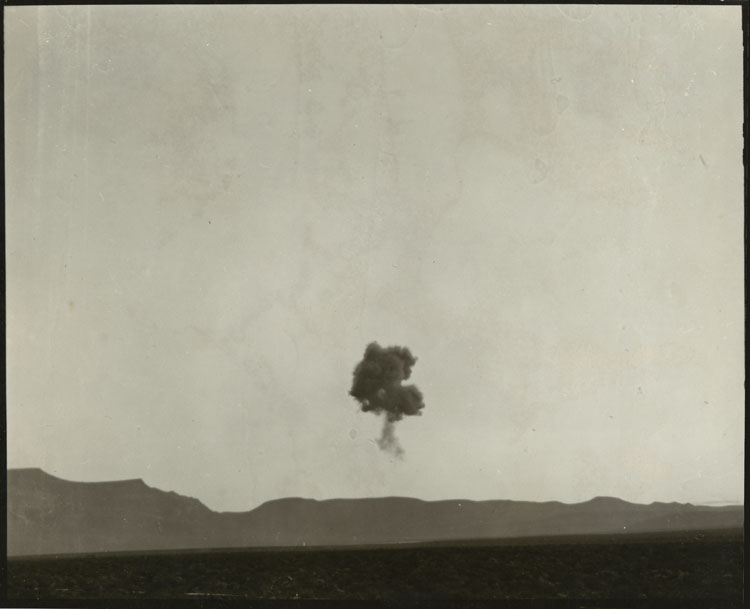
Lassen was a United States nuclear weapons-development test detonated on 5 June 1957 at the Nevada Test Site, in Area 9a on Yucca Flat. The device was suspended beneath a balloon at a height of roughly 152 metres. It was sponsored by the University of California Radiation Laboratory (UCRL, later Lawrence Livermore) as the third detonation of Operation Plumbbob, the sixth and largest test series conducted at the Nevada site.
The shot was a near-complete failure. Lassen tested an unboosted, all-oralloy (highly enriched uranium) small-weapon design and produced a yield of only about 0.5 tonnes of TNT equivalent against a predicted 600 tonnes — under one-thousandth of its intended output, among the lowest of any detonation in the series. The design was later reworked and refired three months afterwards as the Wheeler shot, which reached roughly 197 tonnes.
As a fizzle, Lassen itself released only a small fraction of the fission products of a full-yield shot. The series it belonged to was nonetheless the most contaminating of the continental U.S. programme: Operation Plumbbob put some 58,300 kilocuries of radioiodine (iodine-131) into the atmosphere — more than twice any other continental series. The National Cancer Institute later estimated this at roughly 120 million person-rads of thyroid exposure to the American public, projected to cause on the order of 38,000 thyroid cancers and some 1,900 deaths.